Q&A: Music is the Enemy

Full interview can be found in the first issue of DEATHTRAP. Pick up your copy here.
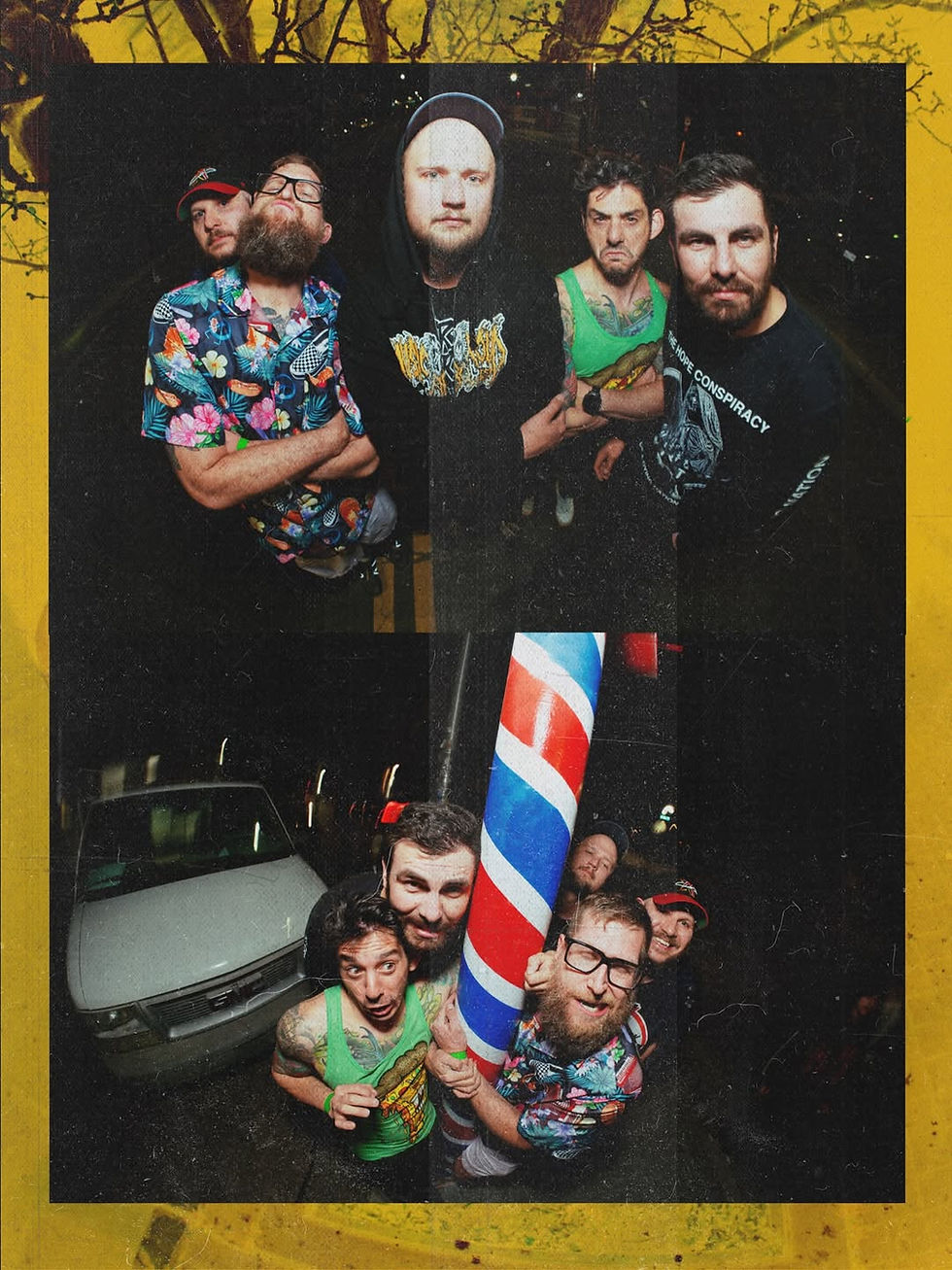
You’ve been a band now for 15 years—what’s something you’ve learned along the way that only time could’ve brought you?
There is a pause that feels like my wrists are being slit and then everybody fucking laughs.
Michael, to Miles: Maybe—to start—talk about how writing has changed. What have you learned about writing these songs—because we’re all players here, right? We’ll interject, but your songwriting—you’re the total leader of it. How has songwriting changed, and how’s working with us?
Miles: I guess when we first started doing this, it was just me writing some stuff, then hooked up with these guys, but it was whatever was running around in my head. We’ve gone through a little bit of circling lineup of folks who’ve been in the band and been a part of this, so—over time, we just get really used to each other and what we’re doing. I think we all know what the vibe is that we’re going for. So when I write now, I know I’m writing for Alex and Kyle, I know I don’t even need to worry about whatever the hell Tim’s gonna do. He’s just gonna make it work. It frees it up a bit more. We’re all a bit more collaborative about writing stuff now.
What does that collaboration look like?
Miles: It’s usually—we bring in some riffs, like Alex has been writing a lot more riffs for the new album. I come through, I’ll take stuff like that, and then do a lot of the composing of it. We’re always doing guitar first, layering in, building out the track—and then I know enough about drums to convey to Mike what I think we should be doing, he polishes that up, Tim lays bass on top of it, fixes all the mistakes, and then we’re good. It takes a long time to write all these. They’re all—for us and our playing abilities—very complicated, just a lot of shit going on. So this is—this EP is two years of writing we were doing, writing and working through all the bugs and everything. It’s a slow process with us.
Tim: It was hard to come back to after covid, and then Miles moved, we only did five songs—in what, six years?—new, so it was hard to get back in the swing of things. We had a couple shows after Miles moved back and everything started opening up again. Going from playing the songs we’ve been playing for ten years to making new ones and writing that and figuring out how we wanna do that—that was a bit of a challenge, getting back into that frame of mind.
Alex: Some of the songs are essentially the same as they were written, and some of them are completely different. “Pangea” [“No Pangea, No Heavan”] is completely different from when we first started learning it.
Miles: I think we kept one piece of that whole song.
Alex: We kept the 7/8 part, but everything else is totally different. One thing that I’ve learned over the years is how to play with Mike. I feel like we’re just so dialed in with each other. He has a very specific way that he plays, and I can just lock in with him now. It’s just so natural for me. And I think playing with any other drummer would be a challenge.
How would you describe that way that he plays?
Alex: It’s more—um—like—flowy, it’s more feel—not like a human metronome. He’s more like a human.
Dynamic.
Alex: Yeah, for sure.
Miles: He plays based on vibes.
Alex: Just today we were practicing, and he tried this new thing in a song, and we hadn’t discussed it before but I just knew what he was doing as it was happening. Just did it.
That’s beautiful.
Miles: They’ve created some weird, symbiotic thing that—even right now, they’ve become one, lounging like the same entity—
Mirroring each other.
[Alex has said his back is hurting so he’s laying down on some pillows on the floor; across from him, Michael is on the couch, slumped as slumped can be, impressive in his equally horizontal position]
Kyle [on songwriting]: I think “Pangea” is really instinctual, too, because it was a different song. And we kept polishing and working different elements of it, and following what sounded cool, and it became a different song. It kind of really informed a lot of the other writing, just listening to what we had, then adjusting and coming up with different stuff, and following what we liked.
Switching gears a little bit—you guys have quite the reputation, so I’m curious, how do you guys approach a live performance?
Tim: I’m curious what this reputation is.
Of being sick performers, of being awesome and beautiful.
Tim: Oh, okay. When I play, I always try to keep my energy up throughout the entire show—I kind of gas out near the end of a set, especially when we play a longer one.
Alex: We’re getting older.
Tim: Fifteen years ago it was easy. I could go through an hour, hour and a half setlist I think I’d be fine. About 30 minutes now gasses me out a little bit. But I just try to keep moving more than anything. Lot of it is just pure instinct and moving around, especially if a crowd’s really vibing with it, and energetic, that really feeds into my energy personally, and it just keeps growing. But we’ve played for six people and I’ve still moved around a lot. All of us have.
Miles: This music, I think, is stuff that we all really like, and—
Alex: Yeah, that’s helpful.
Miles: —we’ve played in front of six people and it’s still not hard, at least to me, to get into it and do it. I don’t know, that’s why I was writing whatever I wrote, because it was whatever I was into. So it’s not difficult for me to be into it. The live performance—the real answer is, I was, as a kid, probably way too into professional wrestling, and then got into hardcore music. There’s just a lot of physical, violent pageantry that I think is important that has just stuck with me for maybe too long.
Alex: So, I just kind of close my eyes and go into the zone pretty much the whole time. Even during practice I’ll just feel myself moving around and rocking. I like our songs, and I like playing them, and it just makes me move.
Tim: This is music I would actually listen to. That’s a big thing—I’ve played in bands where I wouldn’t necessarily like the music that I played. It grew on me. But with this, I liked every song from the beginning when I joined.
Kyle: Just still being able to play these songs—and everybody’s so busy right now that when we can play, and just fully get to express the excitement of playing music together, it’s the fuckin’ best. It’s so much fun, that we just have the most fun that is possible because it’s just, yeah. It’s always been.
I guess I take for granted the fact that musicians will always play the kind of music that they like. But now I’m seeing that’s not totally the case.
Miles: I was in a bunch of bands before this. The reason why I started writing this stuff is that I was in a bunch of bands and I kind of hated all of them. We were doing stuff, but I didn’t really like any of the stuff we were doing. I didn’t think it was very good, it wasn’t what I was into at least. That’s why I started writing Music is the Enemy stuff from the very beginning.
So this feels really good.
Miles: Yeah. I mean, yeah.
You also made me think of something when you said “violent pageantry.” I don’t know how to exactly phrase this, but what’s that line between violent pageantry and actual violence? Is there one, or is it all kind of, just…
Miles: I mean, certainly. Within the context of music—
Alex: The only people at the show getting hurt should be us.
Michael: Or the ones that are in the middle of it. The ones that are consenting, and like, I’ll probably get a fist in the face or something. And absolutely. I totally expect us to take hits.
Miles: I don’t think we’re quite there. We’re not a beatdown, hardcore band. It’s not really stuff that I’m super, super into, either. But we’re aggressive, there’s a certain amount of it there that’s always gonna be there. I think it’s good and healthy, as long as everybody knows what is going on. Go to a beatdown show too, and as long as everyone’s there and is fine with what everybody’s doing, I see no problem with that.
Kyle: There’s still the matter of taking care of each other that still happens at a beatdown show.
Miles: Yeah. As long as everyone’s taking care of each other, and everyone understands what the game is, then it’s perfectly fine. We’re all a little fucked up and wanna go get punched in the face at a show…I don’t know, there’s something wrong…
Or something right.
[Michael, slumped still, nods.]
Forthcoming from ABQGR: DEATHTRAP No. 3, The Roadtrip Edish; The Ghoul No. 1.


Comments